The boundary
Detection Sits Outside the Launcher.
Canadian Shield Builds It In-House.
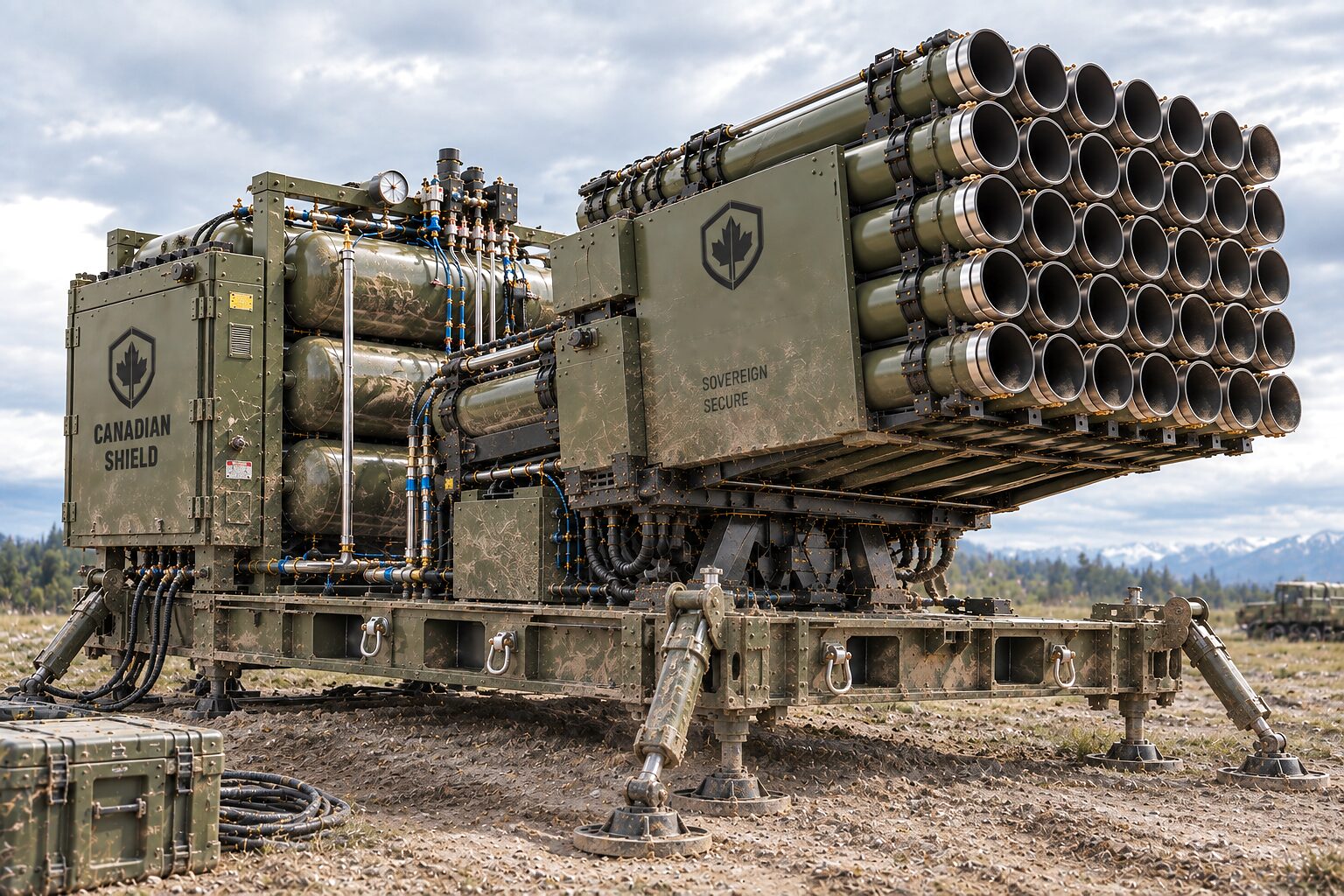
The loop on this page starts at a cue already formed. Everything upstream of that cue — detecting, tracking, classifying and cueing — is Canadian Shield's own, built in-house, and sits outside the launcher and the round.
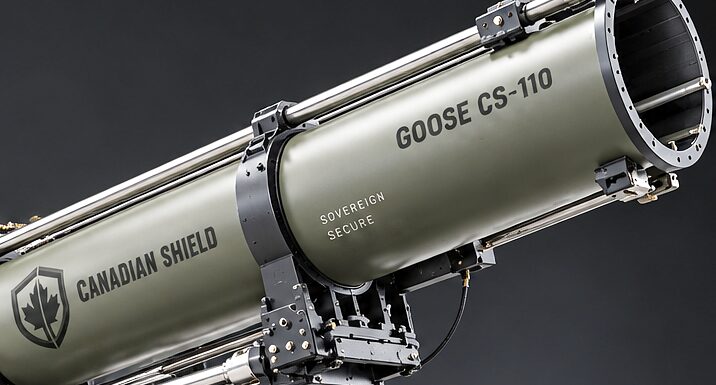
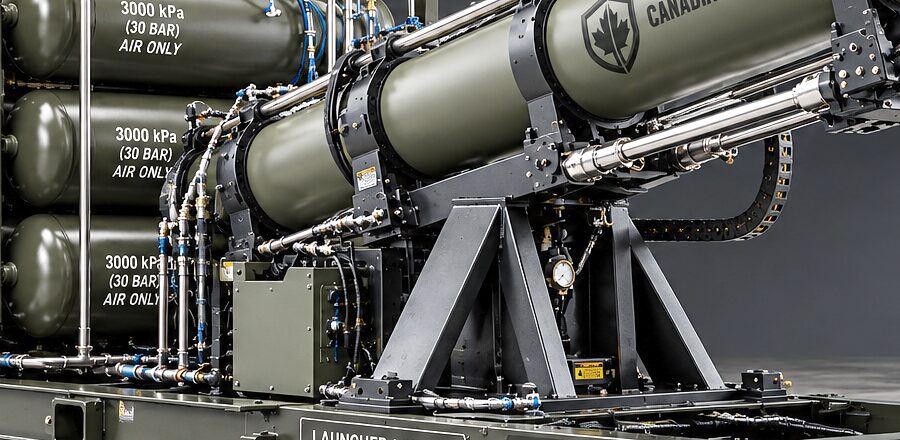
The launch platform's own sensing is narrow by design: a pressure transducer that reads the accumulator's stored energy, and a boresight reference that ties the tube to the mount's own aim point. It carries no radar, no command-and-control node and no EO/IR sensor of its own for finding a target. Detect, track, classify and cue are Canadian Shield's own, built in-house, and they sit outside the launcher and the round.
What crosses into the launcher from those systems is the cue described earlier on this page — bearing, range, height — arriving over a wire as a permissive, never as a command that can arm or fire anything on its own. The launcher's part of the engagement starts at the lay and ends at the reload; everything that decides what gets cued sits on the far side of that wire, and a person still arms every shot.