Guidance and the doctrine
The Fleet Carries No Radio.
This Work Is the One Exception.
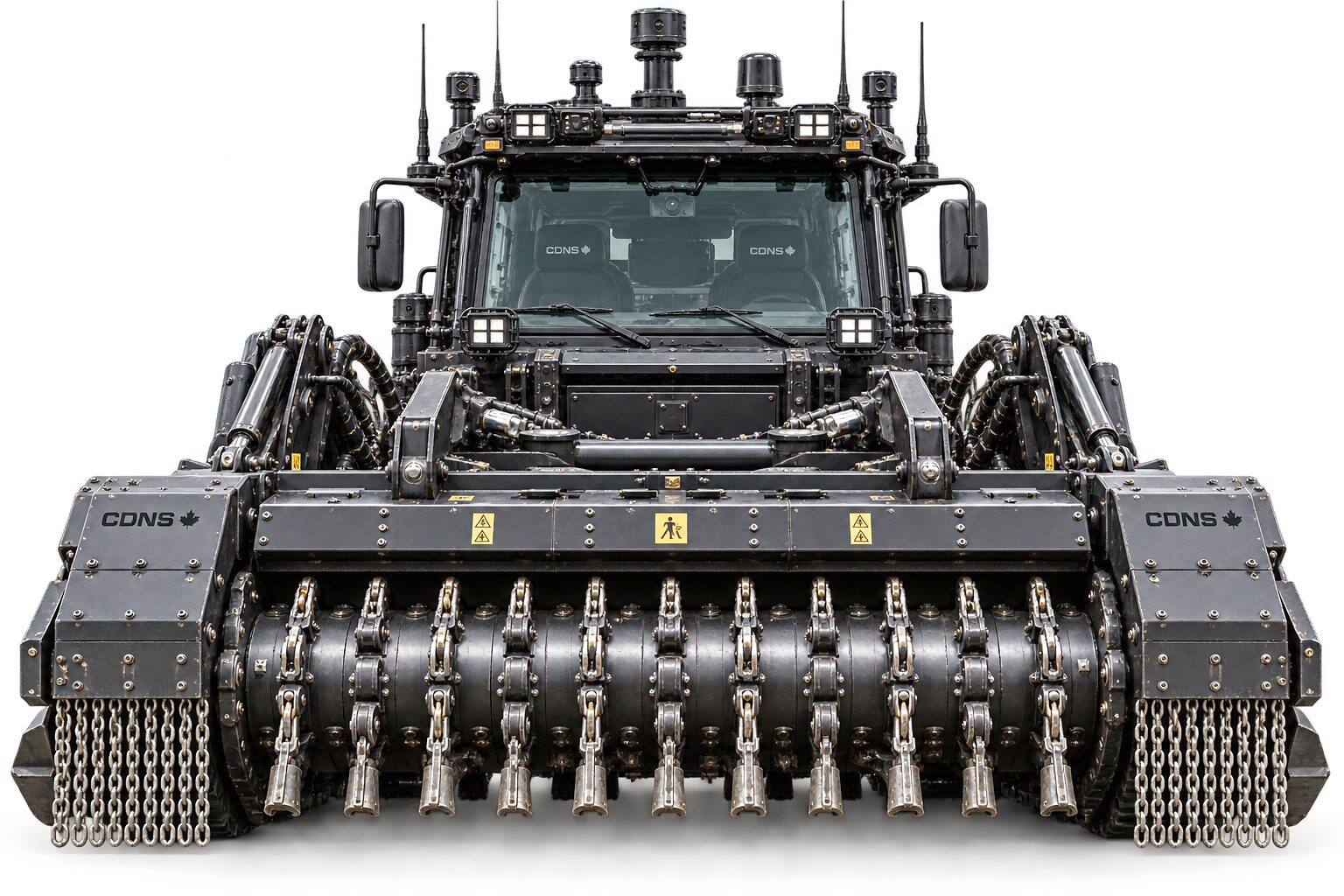
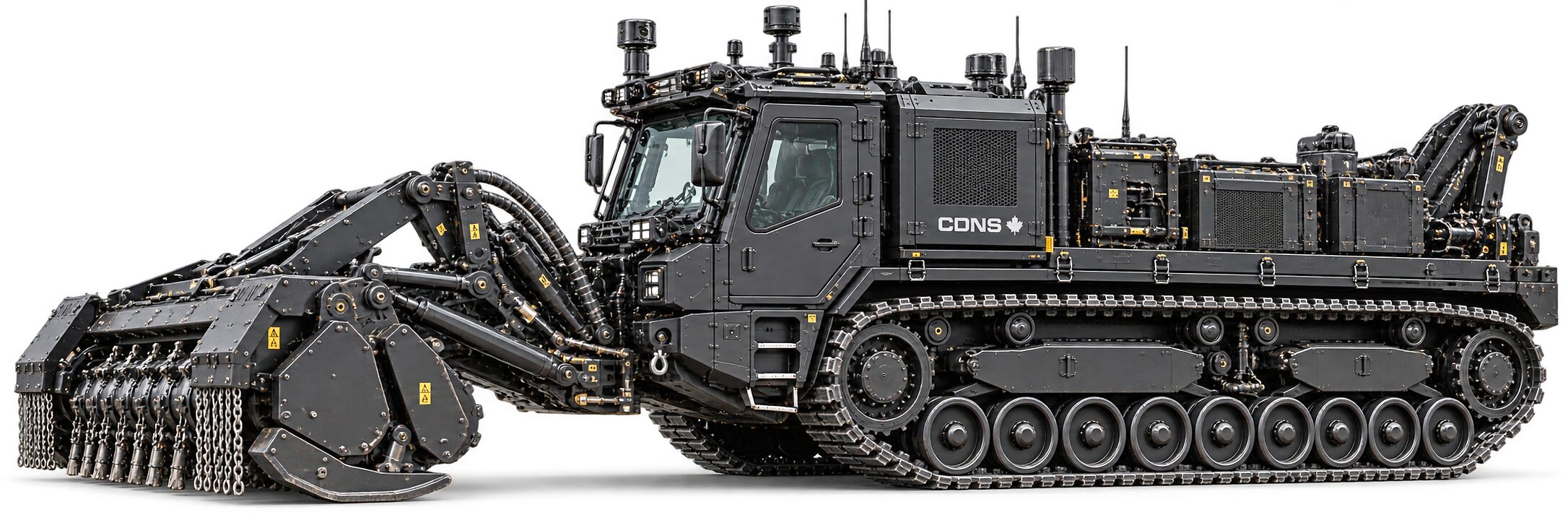
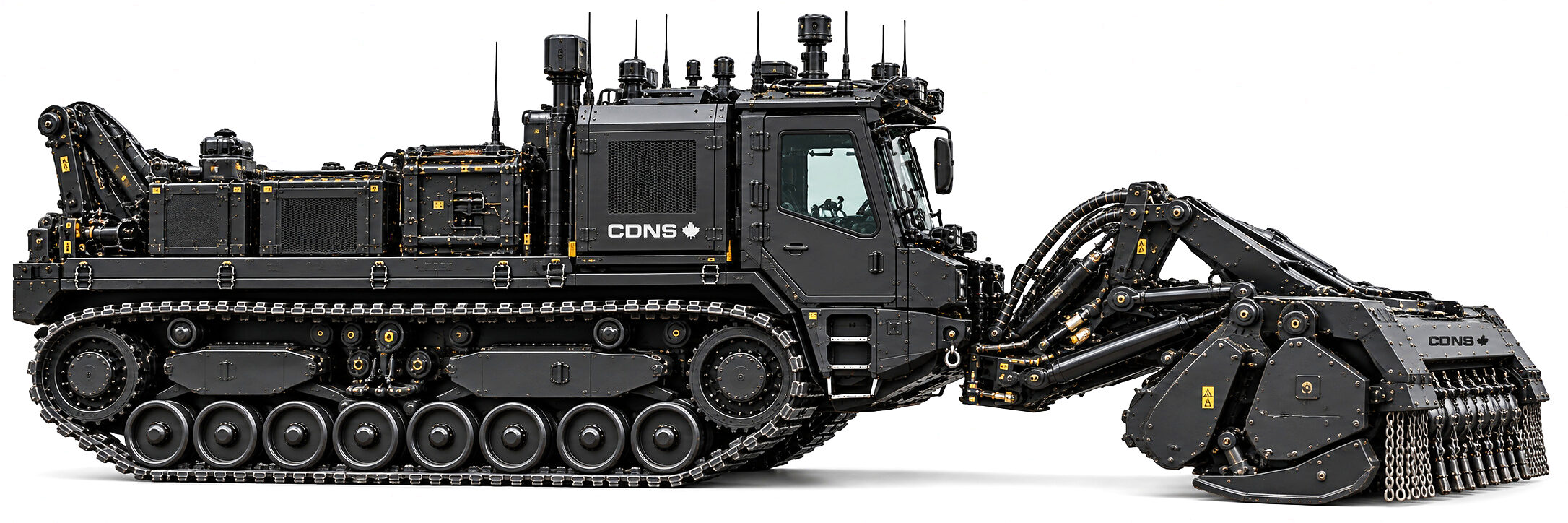
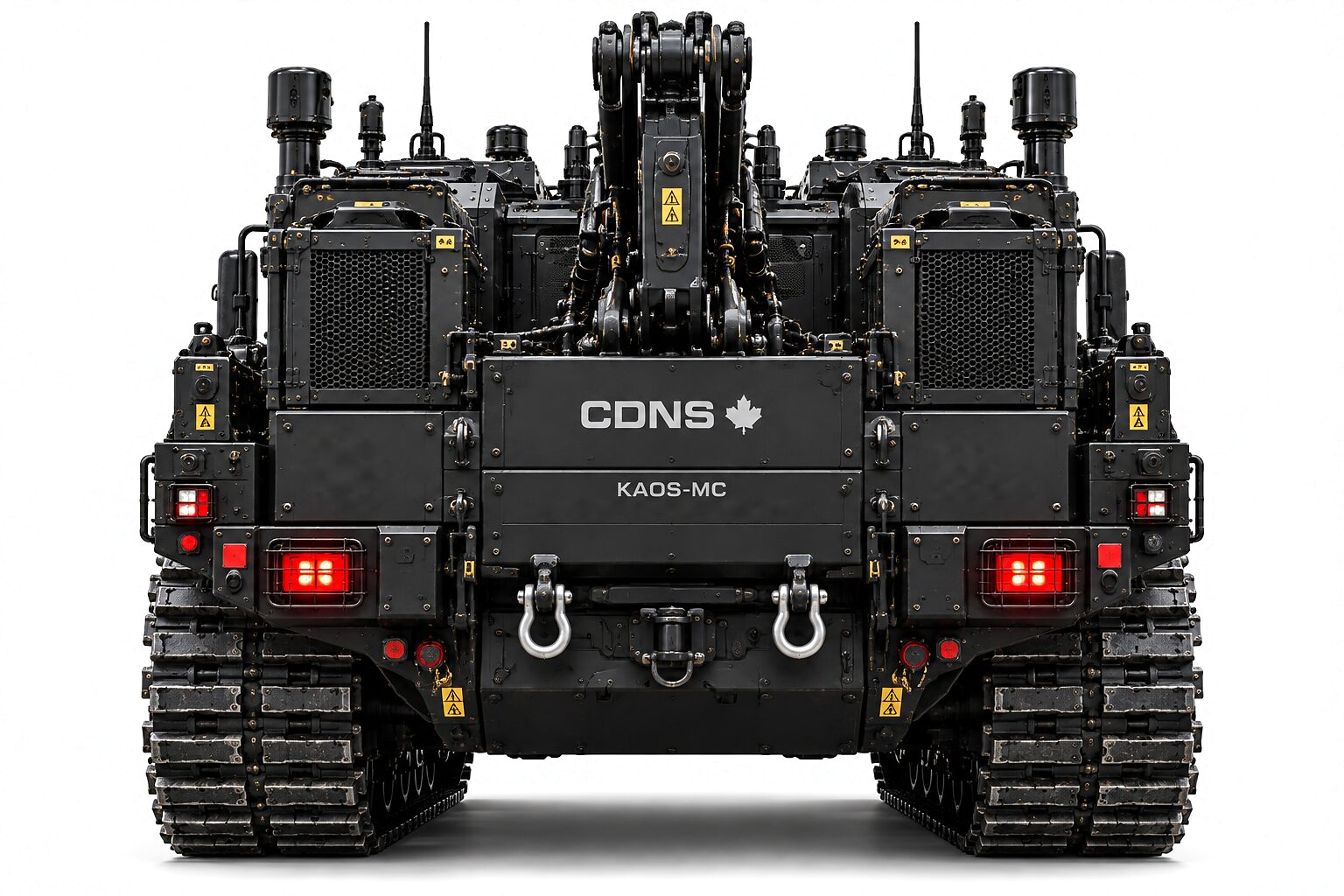
No radio and no GPS aboard the fleet, with the one ruled exception: the two mine clearance configurations, KAOS-MC Land and KMM-01, carry GNSS and command links, and KMM-01 also carries a marine radar and AIS to see traffic and be seen. The reason is the work rather than the platform.
The rest of the fleet holds the rule because of where it works. The interceptor rounds fly on a fibre, the underground plant is guided down one, and the subsea hulls carry no receiver at all, because seawater does not carry radio and a guidance loop that can be jammed is a liability. Those platforms work where a link cannot be trusted or cannot exist, and the rule costs them nothing.
Mine clearance is different work. It is done inside a boundary the customer set, on ground whose perimeter the customer controls and has surveyed, under a named supervisor who is watching — and it must produce a record somebody audits afterwards, in the frame the site is surveyed in. That makes satellite positioning the frame the deliverable exists in rather than a convenience.
The base KAOS carrier is commanded down an optical fibre from a stand-off station. A clearance machine walks kilometres of lane and drives over the ground behind it, so this configuration carries a dual-redundant command link, with radio, satellite and mesh as its options. The failure worth designing against is losing the link altogether.
DoctrineThe link carries the supervision. It never carries the safety.
A lost link is a defined degraded state that stops the machine or returns it, settled before the task starts. It is never a state in which the machine keeps working unsupervised, and never what makes it safe: the brakes are held open by power and close on their own springs.
Both halves have to hold. The link is how a supervisor exercises authority, so if it is gone the authority is gone, and a machine that carries on down a lane without it has quietly promoted itself. And the safety behaviour cannot sit downstream of the link: a safety function that depends on a radio is not a safety function.
Where the work is supervised, bounded, lawful and recorded, the fit that supervision requires is the correct answer, and the doctrine is upheld by what the machine does when the link goes. The tiers are on Technology and Doctrine.