Machine skills
Two Hands for One Seat.
Ours, or Your Own Operator's.
Two ways of working can sit in the seat, and a person chooses which one before every job. What differs between them is whose way of working it is, and who owns what is built from it.
LOADEDIt arrives working
Every unit arrives knowing how to run the common machines in its family, from recorded hours of qualified operators on real ground. Fit it, calibrate it, and it works the way a competent hand would. A starting point, not a limit.
TAUGHTYour operator, your machine, your way
Put the capture kit in the cab and your best operator in the seat for a while. It learns that machine, in that cab, on your ground, from the person who already runs it best. That way of working stays yours, and it goes nowhere else.
A third way in, on the Responder line only, brings the hand rather than the way of working: where the skill is not on your crew, Even Steven recruits for it on a Knowledge Call, at evensteven.team, and on the defence line that way in is held.
Canadian Shield is the house that collects Machine skill sets for autonomy: a way of working taught to or loaded on a machine, chosen before the work starts, which proposes and never authorizes. It collects them for the Tacit Tessera register, which numbers a way of working, licenses it and counts every use. A tile Tacit Tessera carries for this house is stamped CS, the collector's mark.
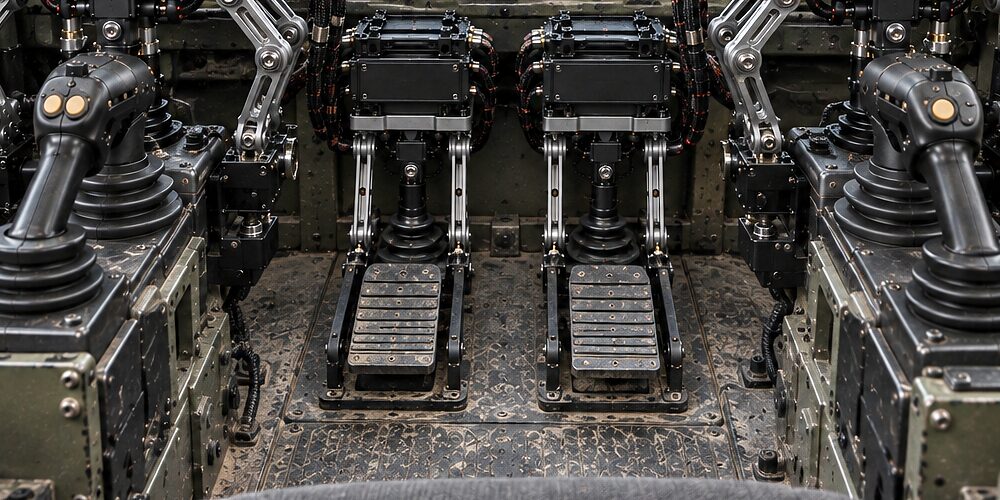
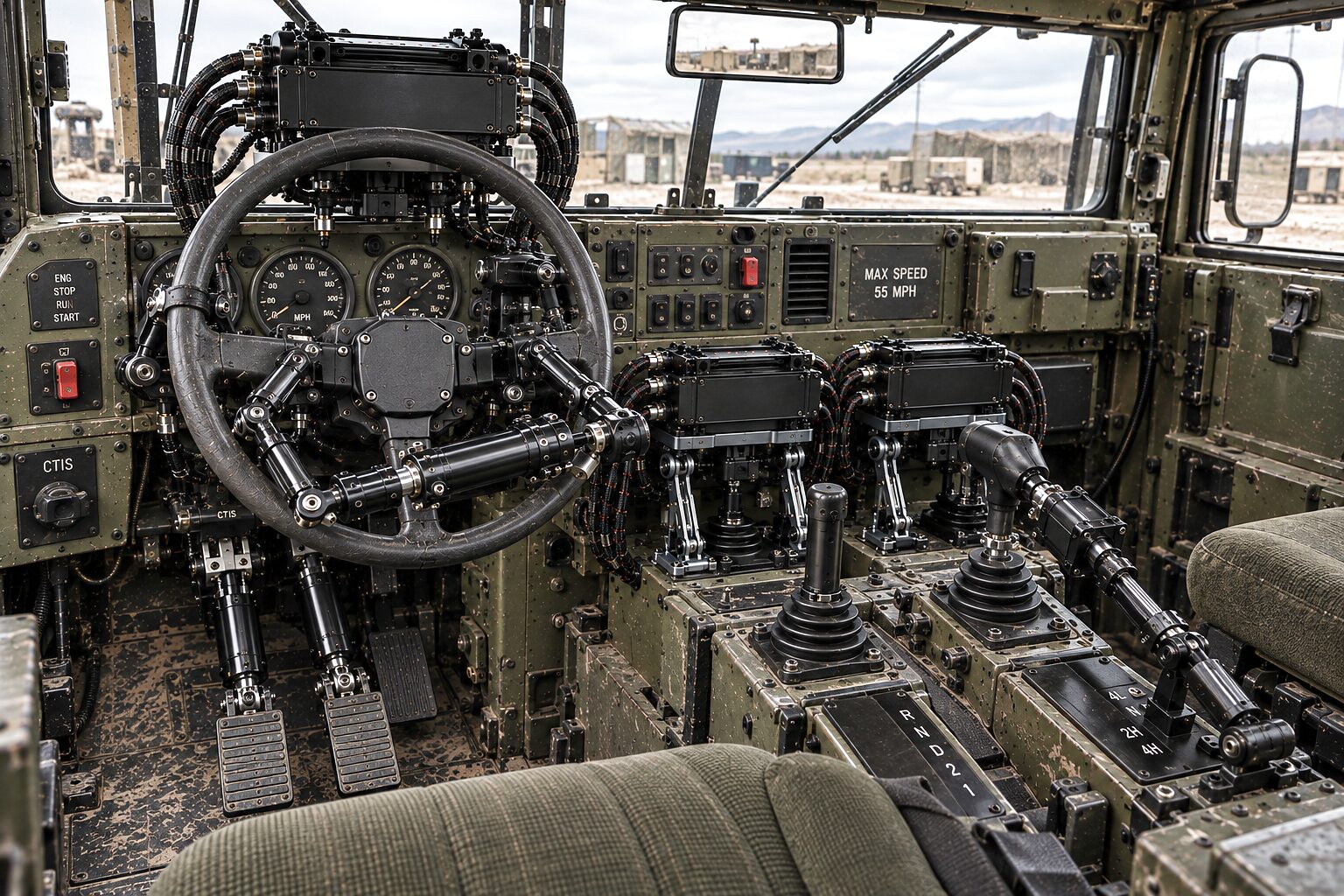
Teaching is a disconnected state. Your operator sits in the seat and runs the machine the way they always have. The unit is out of the seat and nothing of the unit's is connected. What does the recording is the STE Trainer, a separate kit, one per machine family, wired to nothing on the machine, so nothing in the cab can move anything. It records the controls, the machine's answer and the display against one clock, and a camera frames the display and the operator's hands. Every session says who was in the seat, which machine and how the kit was fitted, and is admitted or refused by name.
The learning happens away from the machine. Demonstrations are compared across operators for the common successful structure, and any behaviour that violates an engineering or safety constraint is rejected even if an experienced person performed it. What comes back is a signed machine skill package with entry conditions, limits, abort conditions and the perception confidence it needs, frozen against the exact machine, hardware, software and calibration it was built for. A named person signs for the update that carries it to a unit. The full pipeline is on the Autonomy page.
What Tacit Tessera numbers is the reviewed package, not the sessions it was built from. The recordings stay with Canadian Shield, and an entry carries none of them and nothing that identifies anybody.
A way of working proposes. It never authorizes. Hard safety limits outrank every person, every person outranks the software, and a loaded skill is software.