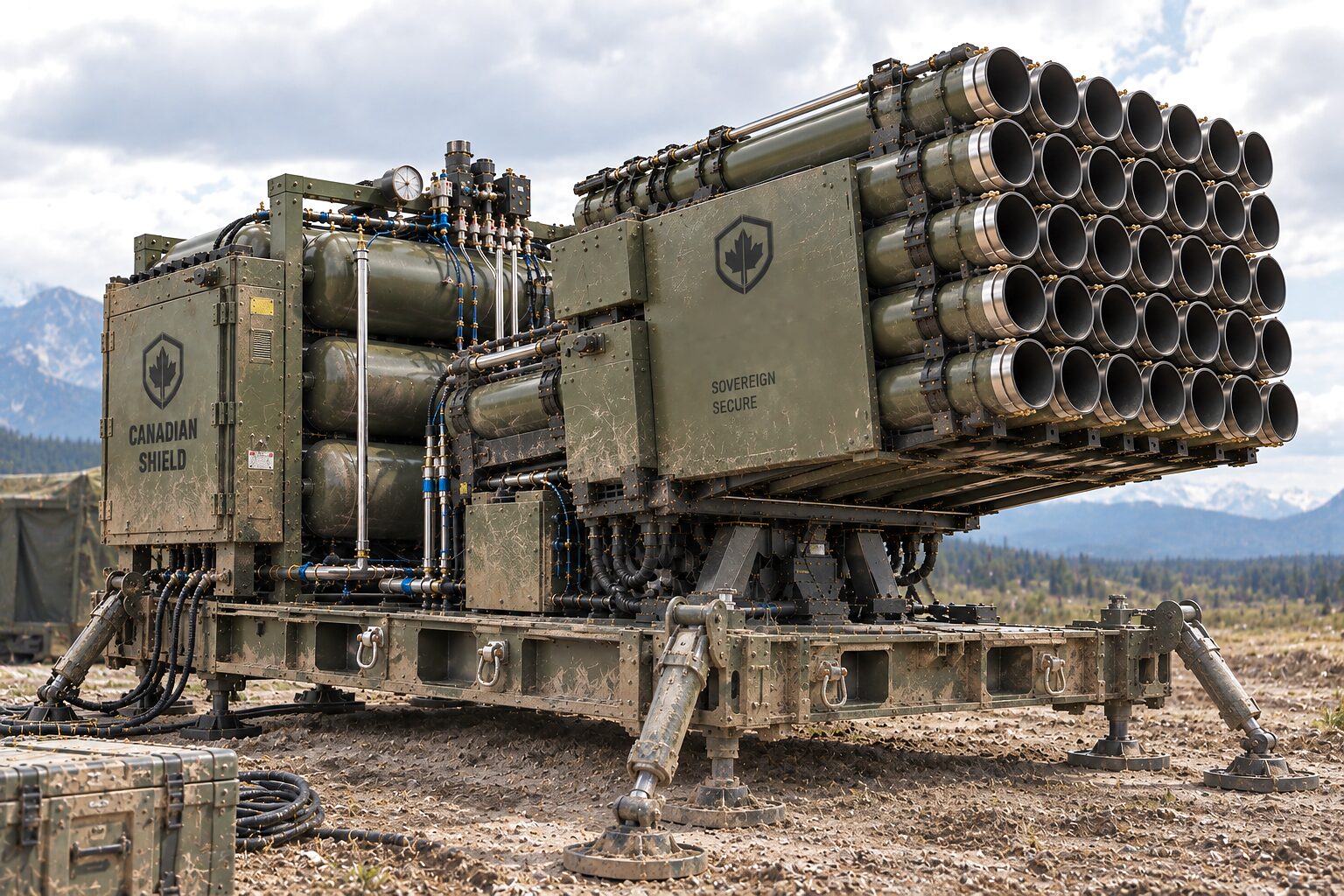
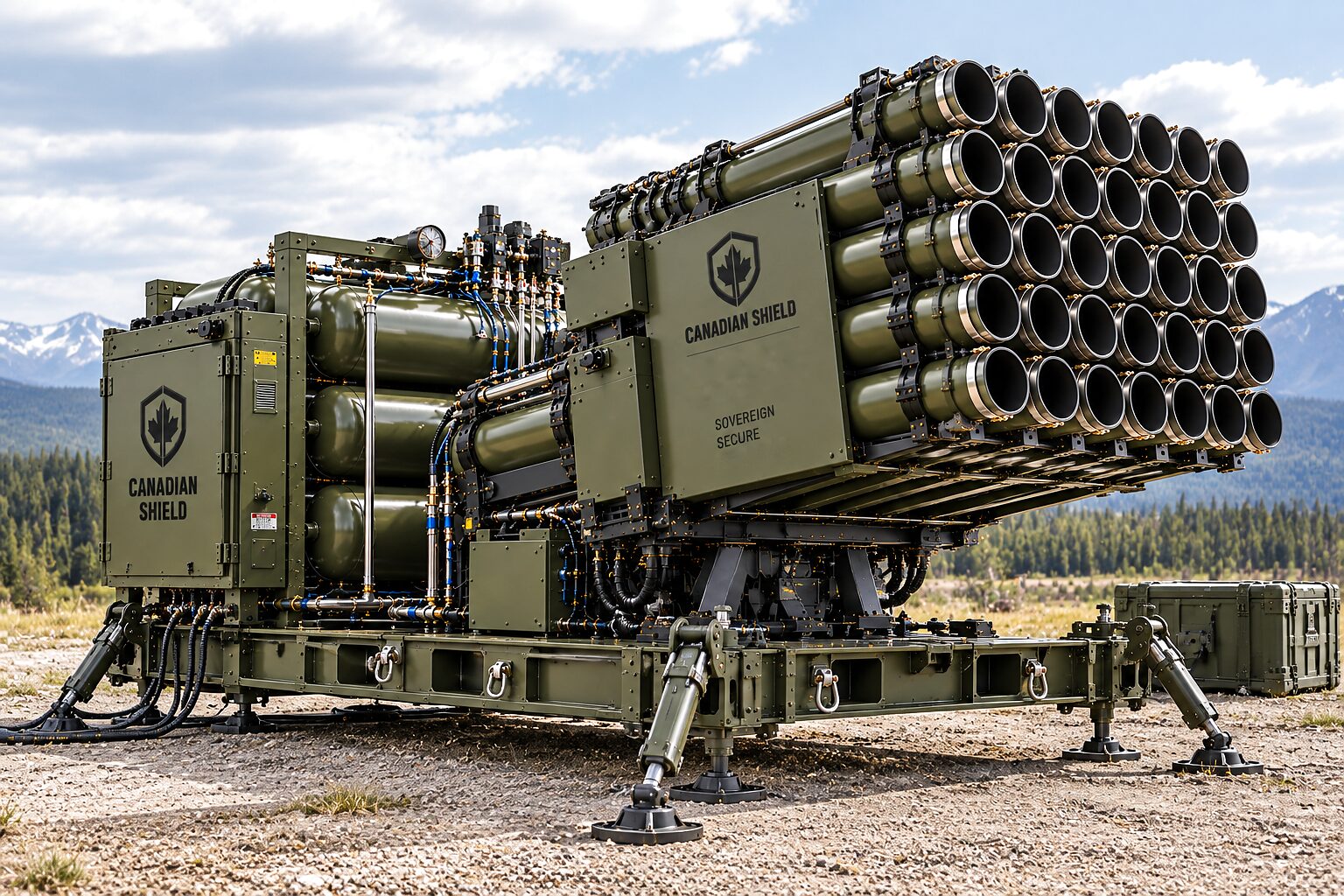
Encapsulator CS-111
The Same Round Behind the Bulkhead.
A Bay That Opens in Front of It.
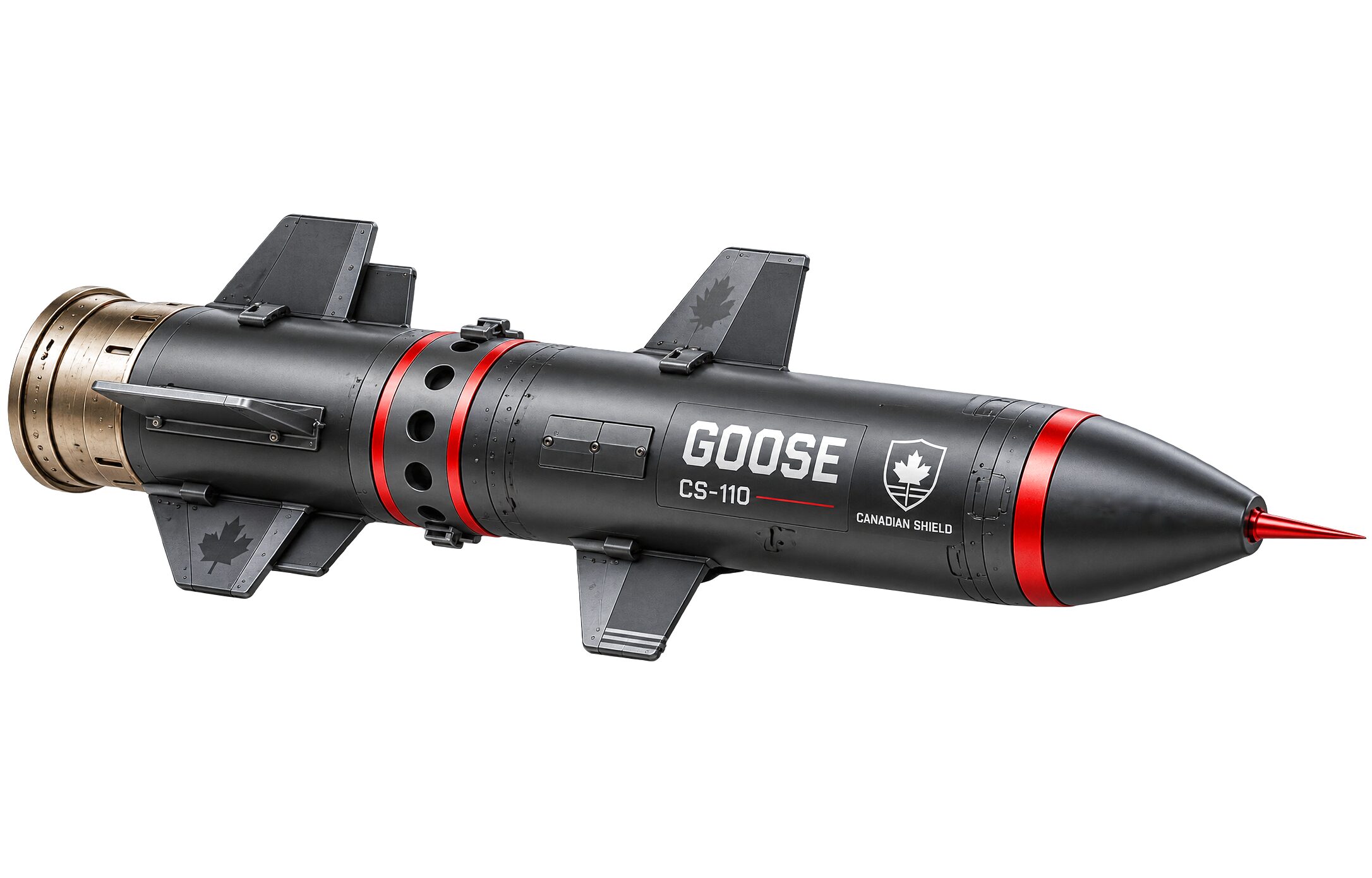
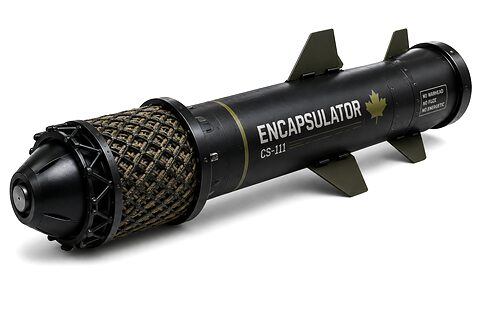
Encapsulator CS-111 is Goose with a nose that catches instead of one that collides. Everything from the tail fins forward to the nose bulkhead is CS-110, unchanged, and that is a constraint being held rather than a coincidence.
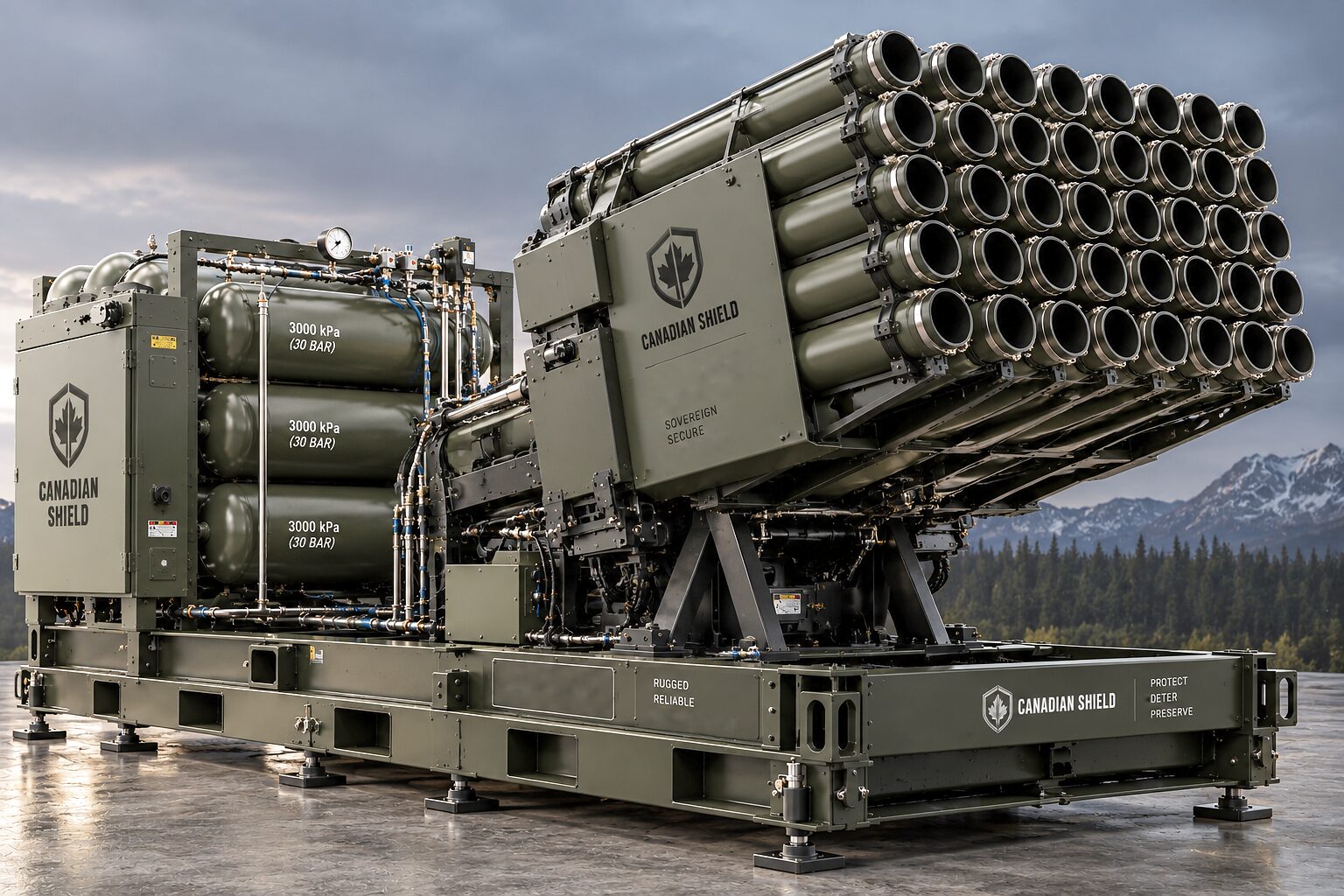
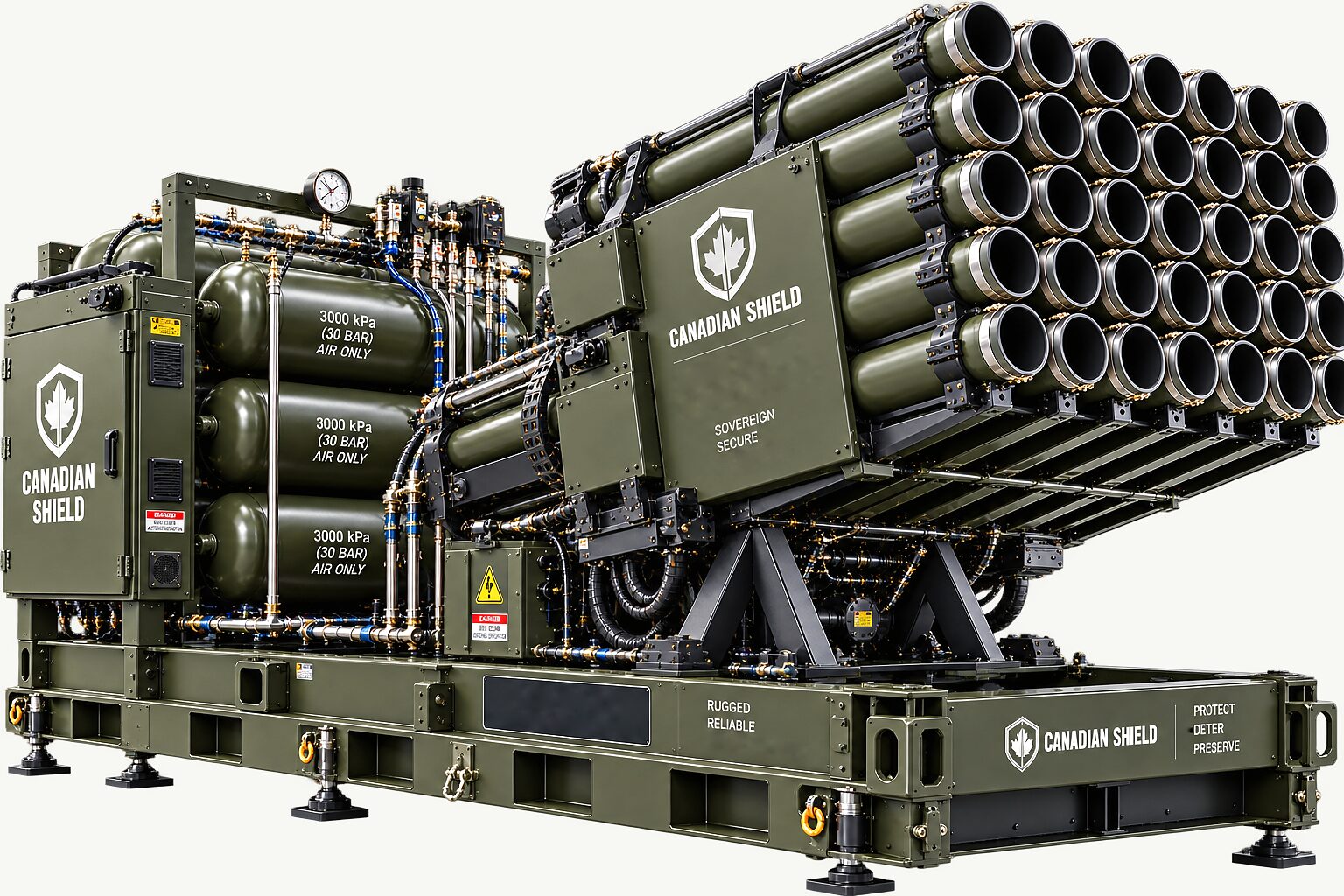
Mass, bore, exit velocity and magazine pitch are held identical to the lead round: 1.6 kg all-up, Ø90 mm across 63.6 cm², about 189 m/s at the muzzle. That is what lets the two index in one magazine, so a launch position is not a position for one round or the other.
Forward of the bulkhead is a bay built around four elements: a stored energy source, the capture medium, a dispersal head and a mechanical release. Whatever goes in there rides the same stroke as the round, about 607 g averaged over it and 1,159 g at the peak, and the nose bulkhead carries that load into the hull sidewall. At the base of a 180 mm liquid column it comes to about 11.8 bar.
Two consequences follow from that. The payload self-pressurizes for the stroke, so a pressure-triggered release is a contradiction and the release has to be a positive mechanical action. And free-expanding chemistry runs a thousand to three thousand times too slowly for the window, so it is ruled out as the primary medium. Filling a 12 L envelope inside a 5.0 ms window takes about 2,400 L/s, the rate class of an automotive airbag, and the design arithmetic favours stored gas in a high-pressure bottle to reach it without a gas generant.
The effect is rotor fouling. Wrapping even a small multirotor whole takes far more mass than the bay can carry, so the achievable effect is localized: foul one or two rotors, unbalance the disc, and the target comes down intact. A preset round flies the arc it was given and cannot see a moving target, so fibre is the recommended primary tier here. The arithmetic in full is on Encapsulator CS-111.